Something to Paint On
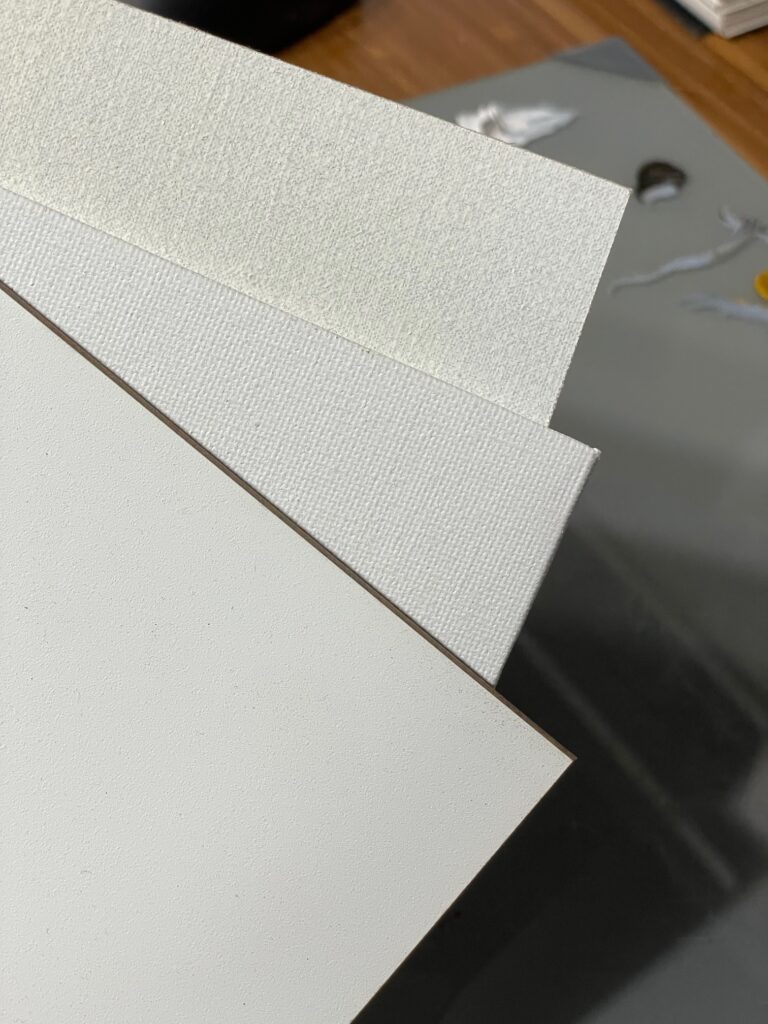
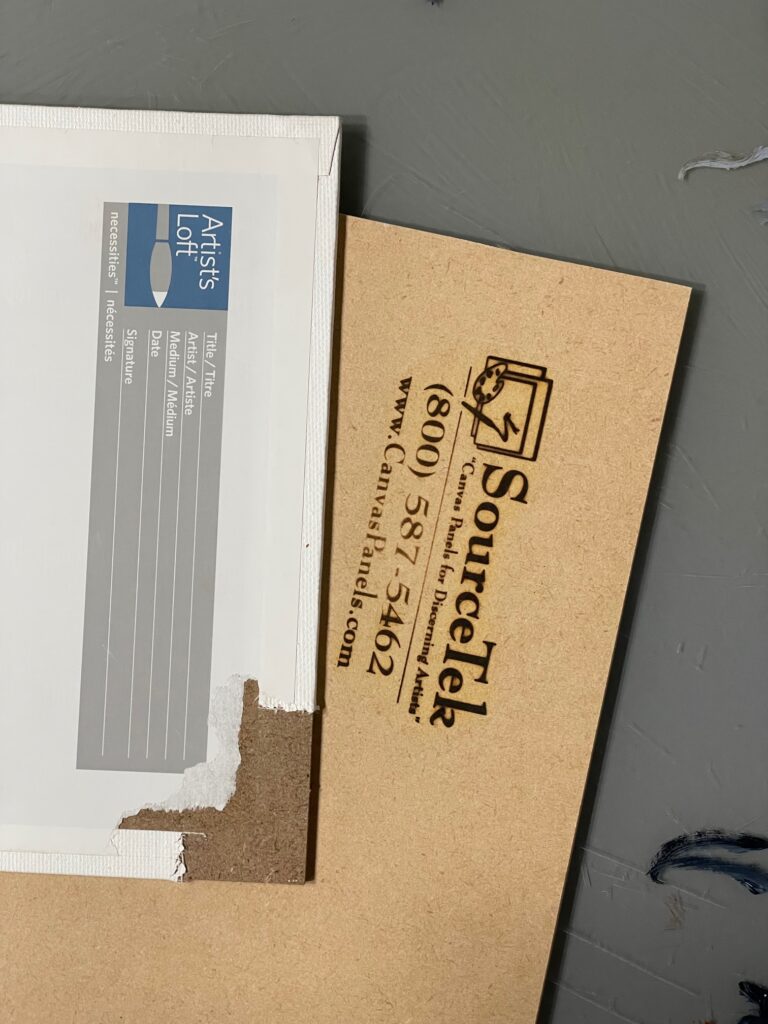
I prefer canvas panels because they are easy to frame and take up less space than stretched canvas. I started out and still practice with affordable Artist’s Loft panels from Michaels. These are made of a medium weave cotton canvas, acrylic-primed, on hardboard. The texture isn’t ideal for fine detail, but detail is overrated and they otherwise work well! I appreciate that their affordability allows me to go wild in practice without fear of creating a reject.
My favorite panels are SourceTek Claessen’s #13 Fine Weave for 11″x14″ and smaller and #66 Medium Weave for 12″x16″ and up. These are linen, oil-primed, and I like the hardboard option rather than the Baltic birch which I found to warp. The Gatorfoam option would also work well, but the additional cost is not necessary for smaller panels which are plenty light when made with the lower cost hardboard. I do more prep work and a small study before painting on these nicer panels to increase the chance of creating a keeper.
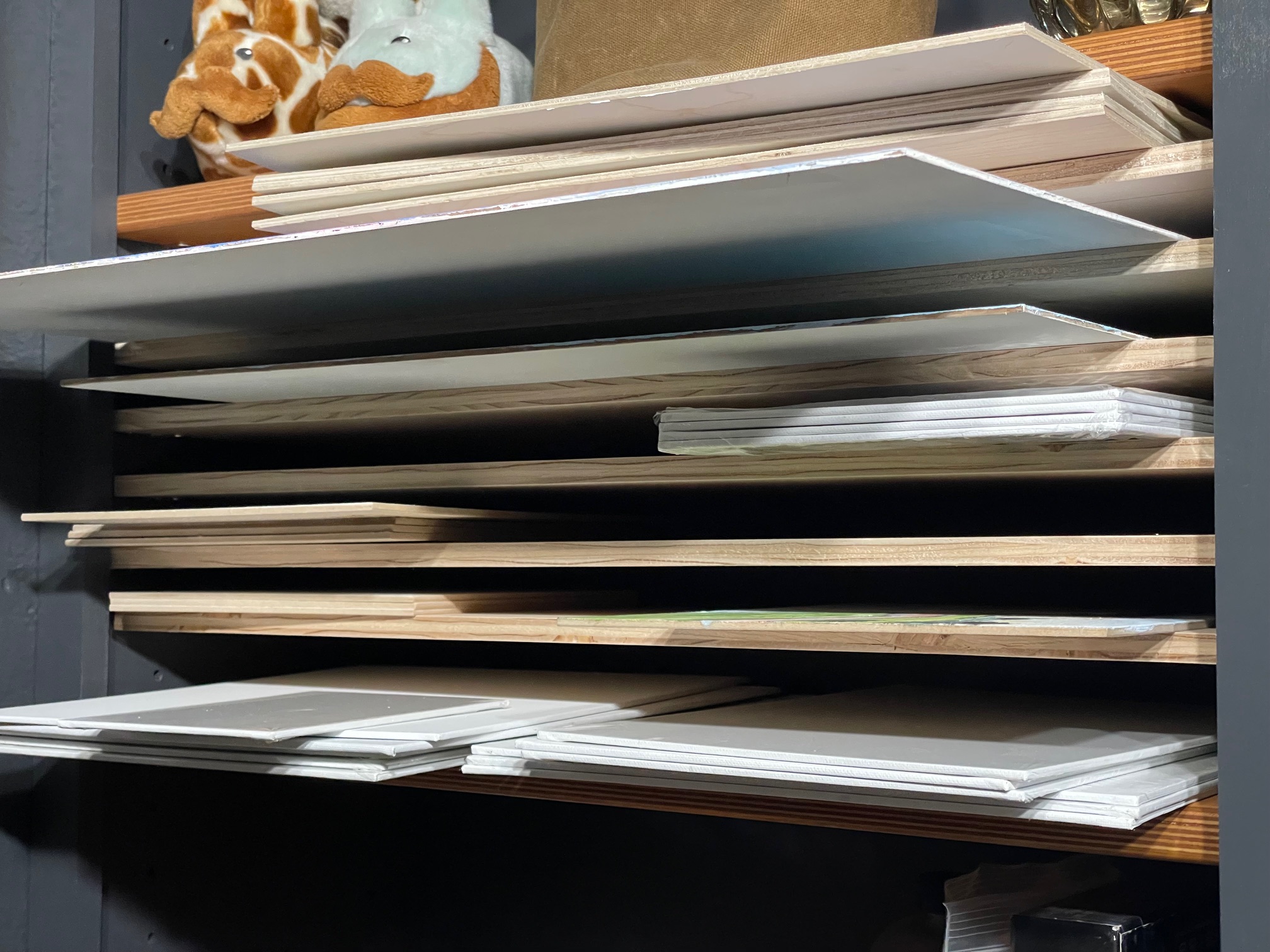
Sometimes I need a non-standard size to fit a particular vintage frame. For this I have so far had good luck with regular old hardware store 1/8″ hardboard, no canvas. I sanded then applied three thin coats of acrylic gesso to both sides, sanding lightly in between each coat. This was per the recommendation of the guys at Obeidi’s – coat both sides to avoid any moisture driven warping. The largest I’ve gone with this option is 20″x24″ and so far it’s worked well. I think this is the limit of how large I will go with the 1/8″ panel and I do miss the canvas texture.
So, these are my three starter recommendations – Artist’s Loft or gesso-ed hardboard for practice, SourceTek panels for a premium feel, and hardboard for custom sizing. I’ve recently found an artist favorite panel backing material, aluminum composite (ACM), available in town. So, stay tuned for info on DIY ACM canvas panels.